SEO vs AEO vs GEO: How Modern Search Methods Change Business Rankings
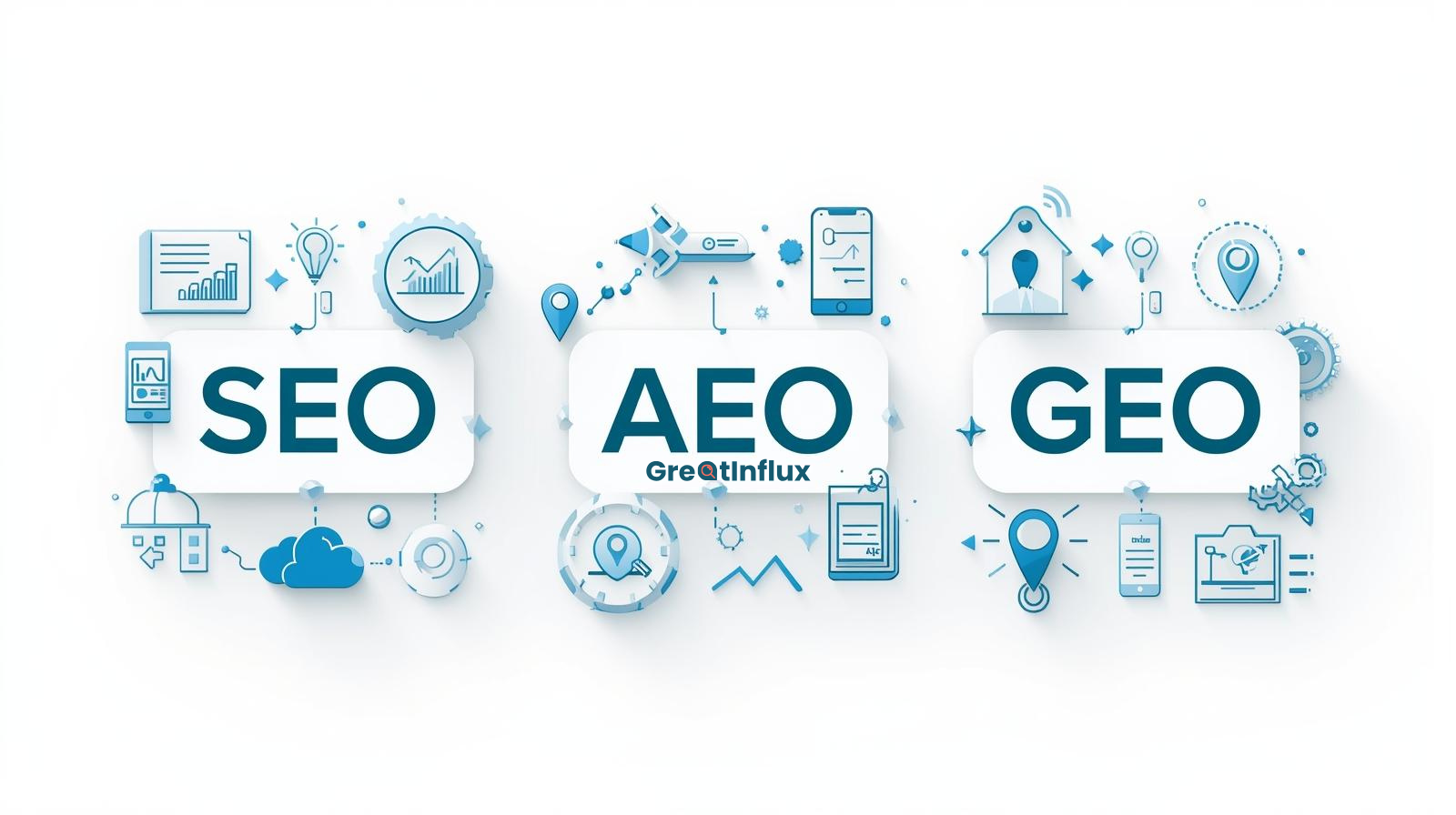
Table of contents
SEO optimises pages to rank in search engine results; AEO (answer engine optimisation) structures content so it is chosen as the direct answer in featured snippets and voice results; GEO (generative engine optimisation) makes content citable by AI systems such as ChatGPT, Gemini and Perplexity. A business now needs all three, and they share most of the same foundations. This guide explains the differences and how to work on them together.
In 2026, the question "How do I get on the first page of Google?" has become more complex. As a business owner, your potential customers aren't just typing into a search bar anymore—they are talking to their watches, asking ChatGPT for recommendations, and getting AI-generated summaries of your services.
To stay visible, you need to understand the three pillars of modern digital discovery: SEO, AEO, and GEO.
1. SEO (Search Engine Optimization): The Foundation
SEO is the traditional method of optimizing your website to rank in search results. Think of this as your "Digital Storefront."
- The Goal: Ranking in the "Ten Blue Links" on Google or Bing.
- The Focus: Keywords, high-quality backlinks, and technical health (like fast loading speeds).
- Business Impact: High SEO rankings build long-term brand equity and drive the highest volume of traditional website traffic.
2. AEO (Answer Engine Optimization): The Quick Win
AEO is about providing direct, concise answers to specific questions. This is what powers voice search (Siri/Alexa) and "Featured Snippets" at the top of Google.
- The Goal: To be the single, definitive answer provided to a user.
- The Focus: Using FAQ sections, structured data (Schema), and "how-to" guides.
- Business Impact: AEO positions you as an instant authority. Even if the user doesn't click through to your site, they see your brand as the "expert" who solved their problem.
3. GEO (Generative Engine Optimization): The New Frontier
GEO is the newest and perhaps most critical strategy for 2026. It focuses on making sure your business is cited and recommended by Generative AI models like ChatGPT, Claude, and Google Gemini.
- The Goal: To be the "suggested brand" when an AI summarizes an answer for a user.
- The Focus: Citations in news articles, mentions on high-authority platforms like LinkedIn and YouTube, and providing unique, expert data that AI models find valuable.
- Business Impact: GEO is about trust and influence. It ensures that when a client asks an AI, "Who is the best provider for [Your Service]?", your name is at the top of the AI's recommendation list.
Comparison at a Glance: Which One Do You Need?
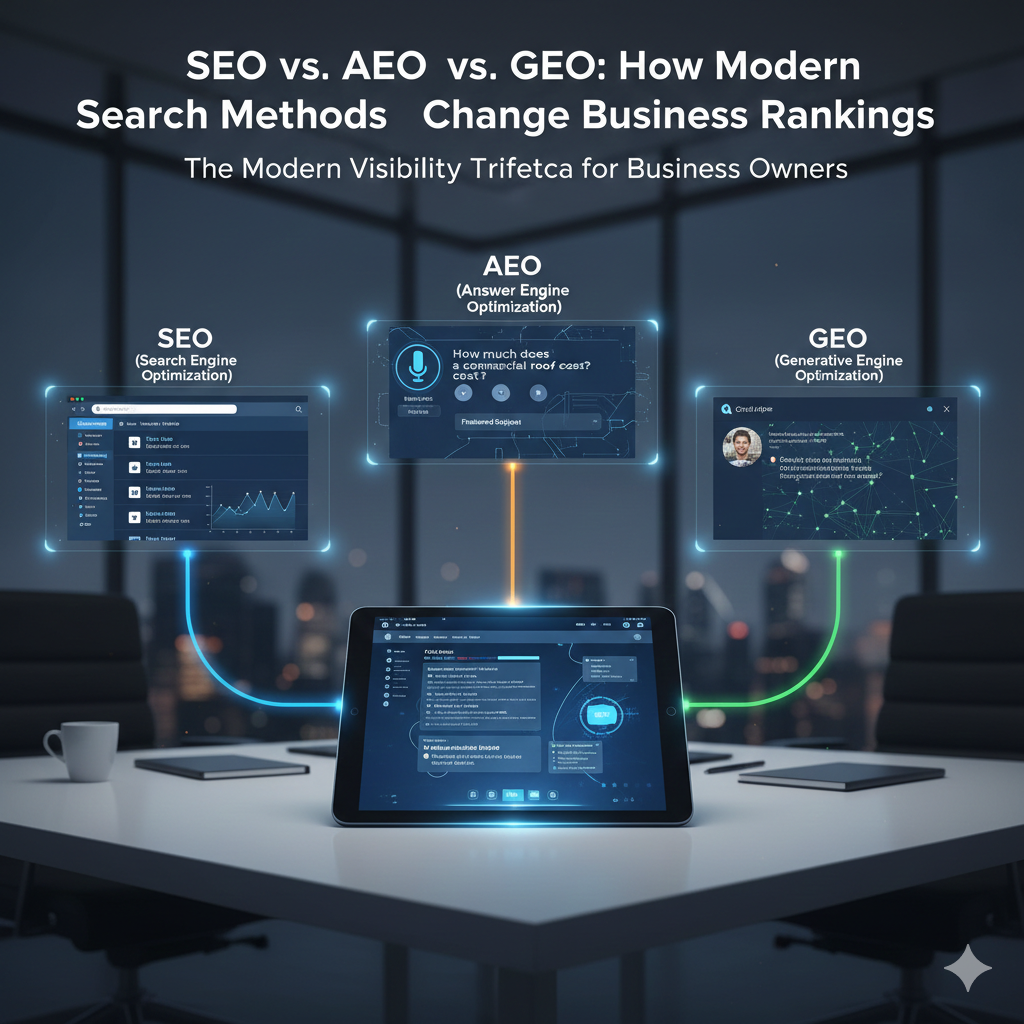
Feature****SEO (Search)****AEO (Answer)****GEO (Generative)****User ActionTyping keywordsAsking a questionHaving a dialogueOutputA list of linksA single answerA recommendationPrimary ToolGoogle SearchSiri, Alexa, SnippetsChatGPT, GeminiBusiness WinWebsite TrafficInstant AuthorityBrand Recommendation
The "Ask SEO First" Strategy
The secret to winning in 2026 isn't choosing one—it's integrating all three. By "Asking SEO First" before you launch a new page or product, you ensure that your content is structured for traditional search (SEO), formatted for quick answers (AEO), and authoritative enough for AI citation (GEO).
Is your business ready for the AI search revolution? Start by auditing your current content to see if it answers your customers' most frequent questions directly and clearly.
Bonus: Your 3-Step "AI-Ready" Audit Checklist
- Check for FAQ Blocks: Does every service page have 3-5 "frequently asked questions" answered in clear, simple sentences? (Critical for AEO)
- Verify Brand Mentions: Is your business cited on third-party sites like LinkedIn, industry news, or local directories? (Critical for GEO)
- Test Mobile Speed: Does your site load in under 2 seconds? (Critical for SEO)
Ready to Dominate the New Search Landscape? Navigating the shift from traditional search to AI-driven discovery can feel overwhelming, but you don't have to do it alone. At Great Influx, we specialize in bridging the gap between SEO, AEO, and GEO to ensure your brand isn't just visible—it's recommended. Whether you want to climb the "Blue Links" or become the top choice for ChatGPT and Gemini, our team is here to guide your strategy. Reach out to GreatInflux today, and let’s build a multi-platform footprint that search engines and AI models can’t ignore.
How can I check my business's "AI Visibility"?
Checking your AI visibility is different from checking a standard Google ranking. You can do this manually by asking tools like ChatGPT, Claude, or Google Gemini specific questions about your industry (e.g., "Who are the top experts in [Your Industry]?") to see if your brand is cited. For a professional analysis, tools like SE Ranking's AI Search Toolkit or HubSpot’s AEO Grader can track how often your brand appears in AI-generated summaries across different platforms.
How much time does it take to rank for SEO vs. GEO/AEO?
Traditional SEO is a long-term game, usually taking 3 to 6 months to see significant movement in search results. However, AEO and GEO can often show results much faster—sometimes in just a few weeks. Because AI models and "Featured Snippets" prioritize clear, structured data, once you update your site with the right FAQ schema and concise answers, search engines can pick up and display that information almost as soon as they re-crawl your site.
How do I know which strategy is best for my business?
The right focus depends on your business goals:
Focus onSEO if you are an e-commerce store or a blog that needs high volumes of traffic and clicks.
Focus onAEO if you are a local service business (like a plumber or dentist) where customers need quick answers to questions like "prices" or "location."
Focus on GEO if you are a B2B company or a specialized consultant where being recommended as a "trusted source" by an AI is more important than a simple click.
At GreatInflux, we recommend a balanced approach to ensure you don't lose out on any segment of the market.
Will AI-generated search results reduce my website traffic?
It is possible to see a decrease in "low-intent" traffic (people looking for quick answers they can now get from AI). However, the traffic you do get will be higher quality. When a user clicks through after seeing your brand cited as a trusted source in a GEO response, they are much closer to making a buying decision.